



Discover the Stunning Beauty of Temple Jewellery - A Timeless Tradition
Temple jewellery is a traditional form of jewellery that originates from South India. This jewellery known for its intricate designs, elaborate craftsmanship, and religious significance. This jewellery primarily adorns Hindu deities in temples and classical dancers wear it during performances.
The term "temple jewellery" derives from the fact that artisans traditionally made these ornaments for idols and temple decorations. However, over time, they have gained popularity as decorative pieces for weddings, festivals, and other special occasions.
Artisans typically craft temple jewellery sets using gold, although they also use silver and other metals. The designs draw inspiration from elements of Hindu mythology, including deities, motifs, and sacred symbols. The jewellery often features intricate filigree work, detailed carvings, and vibrant gemstones.
The popular pieces of temple jewellery designs include necklaces, earrings, bangles, waistbands (kamarpatta) and headpieces (maang tikka). These pieces have a reputation for their bold and ornate appearance, featuring multiple layers and intricate detailing. Artisans often enhance their beauty by adorning them with gemstones such as rubies, emeralds, and pearls.
This jewellery Set holds significant cultural and religious value in South Indian traditions. It is considered auspicious and is believed to bring good luck and blessings. Many families pass down jewellery as heirlooms, and it is often worn during important ceremonies and rituals.
In recent times, jewellery designs has also gained popularity among individuals who appreciate its unique design and craftsmanship. It is not uncommon to see brides and women wearing temple jewellery as statement pieces to complement their traditional attire.
Table of Contents
The Origins of Temple Jewellery
Temple jewellery design is a form of traditional Indian jewellery that has its origins deeply rooted in the history and culture of South India. It gets its name from its initial use of adorning idols and deities in Hindu temples.
The Chola dynasty, which thrived in South India from the 9th to the 13th centuries, is responsible for the origins of temple jewellery sets. The Chola rulers were great patrons of art and architecture, and they commissioned exquisite pieces of jewellery to adorn their temples.
Skilled artisans crafted these intricate jewellery pieces using precious metals such as gold and silver. They adorned them with precious and semi-precious gemstones.

The purpose of temple jewellery set was twofold. Firstly, artisans created these jewellery pieces to adorn the idols of gods and goddesses, enhancing their beauty and magnificence. They intended these pieces to be offerings to the deities, symbolizing the devotion and wealth of the temple and its devotees. Secondly, artisans used these jewellery pieces to dress up the deities during temple processions and festivals, thereby adding to the grandeur of the ceremonies.
Over time, temples jewellery became popular among royalty. Who sought to replicate the intricate designs and craftsmanship in their personal jewellery collections.The designs drew inspiration from various Hindu motifs and mythology, showcasing depictions of gods, goddesses, mythical creatures, and elements of nature. These jewellery pieces featured intricate filigree work, granulation, and an extensive use of precious stones such as rubies, emeralds, and diamonds, defining their distinctive characteristics.
Skilled craftsmen traditionally handcrafted temple set jewellery using techniques passed down through generations. To meet the increasing demand for temple jewellery, artisans have also incorporated modern methods and tools, adapting to the changing times.
Today, people continue to cherish temple designer jewellery for its timeless beauty and cultural significance. People from South India and beyond widely wear temple jewellery during weddings, religious ceremonies, and festive occasions. The intricate craftsmanship and unique designs make temple jewellery a prized possession and a symbol of tradition and heritage.
Temple jewellery is characterized by several distinctive features that set it apart from other forms of jewellery. These features contribute to the unique beauty and cultural significance of temple jewellery. Here are some notable features:
1. Cultural Heritage
The cultural heritage of South India deeply roots this jewellery. It represents centuries-old traditions, craftsmanship, and artistic expressions. The jewellery's connection to Hindu mythology and temple rituals adds a sense of spirituality and reverence, making it an integral part of cultural celebrations and religious ceremonies.
2. Symbolism
This jewellery often features symbolic motifs and designs inspired by Hindu mythology. These motifs, such as deities, lotus flowers, and sacred animals, hold profound meaning and convey spiritual beliefs and values. Wearing temple jewellery allows individuals to express their faith, devotion, and connection to the divine.
3. Traditional Occasions
People primarily wear this jewellery on traditional and religious occasions, including weddings, festivals, and religious ceremonies. It holds auspicious significance and families often pass it down through generations as heirlooms.
4. Precious Metals
Artisans primarily make this jewellery from precious metals such as gold and silver. In Hindu culture, gold holds special significance due to its luster and auspicious nature, making it particularly favored. Artisans often craft the jewellery pieces using pure gold or gold alloys, resulting in a rich and radiant appearance.
5. Gemstone Embellishments
Gemstones play a significant role in temple jewellery. Artisans use precious and semi-precious stones such as rubies, emeralds, diamonds, pearls, and sapphires to embellish the jewellery pieces. These gemstones add color, sparkle, and a touch of luxury to the designs.
6. Versatility
Despite its traditional origins, this jewellery offers versatility in styling. These pieces can complement a wide range of traditional and modern outfits, including sarees, lehengas, salwar suits, and fusion wear. Whether worn on special occasions, weddings, or cultural festivities, temple jewellery adds a touch of elegance and grace to any ensemble.
7. Bridal Significance
This jewellery plays a significant role in bridal adornment, particularly in South Indian weddings. Brides wear elaborate temple jewellery sets, including choker necklaces, jhumkas, vankis, and waistbands, to enhance their bridal attire and radiate a traditional, resplendent charm. The timeless appeal and symbolic significance of temples jewellery make it an essential part of the bridal trousseau.
8. Timeless Appeal
One of the notable aspects of temple jewellery is its timeless appeal. Despite evolving trends, people continue to treasure this jewellery for its traditional charm, craftsmanship, cultural heritage, and its ability to connect them to Indian traditions and mythology.
These features collectively contribute to the allure and beauty of temple jewellery, making it a cherished and prized form of adornment in Indian culture.
Lets See Some Popular Designs of Temple Jewellery
Certainly! Here are some popular designs of temple jewellery designs set:1. Temple Choker Necklaces
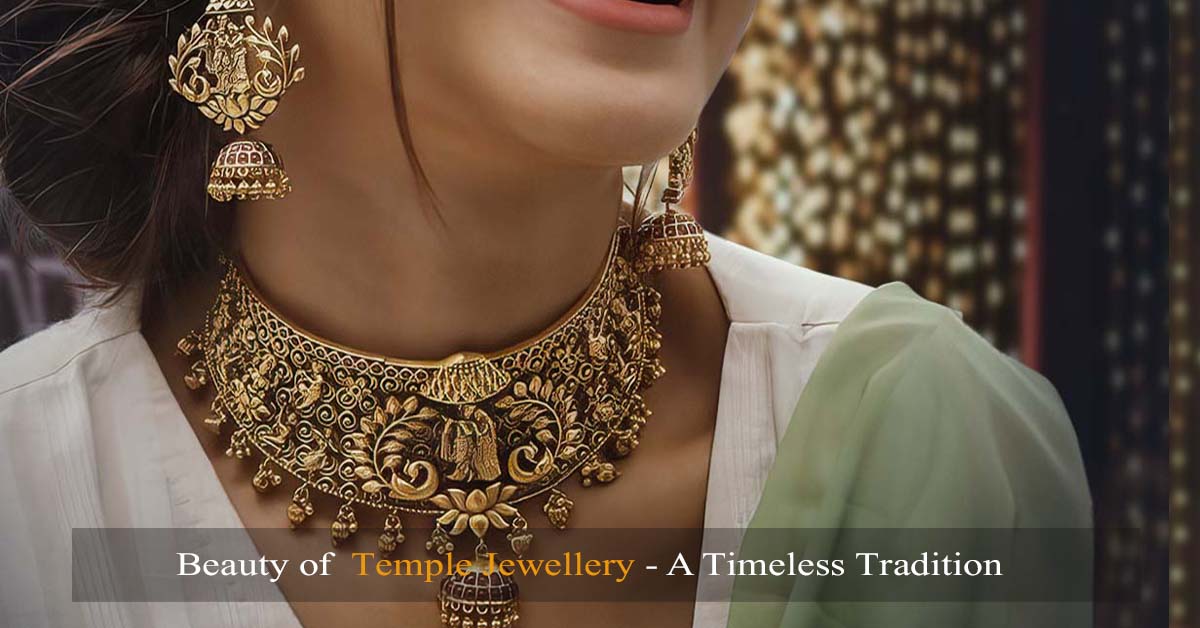
Temple Choker necklaces are a classic and prominent design in jewellery. People wear them close to their necks, and these jewellery pieces often showcase intricate patterns, gemstone embellishments, and dangling pendants. The choker design adds a regal and elegant touch to traditional Indian attire.

2. Temple Jhumka Earring
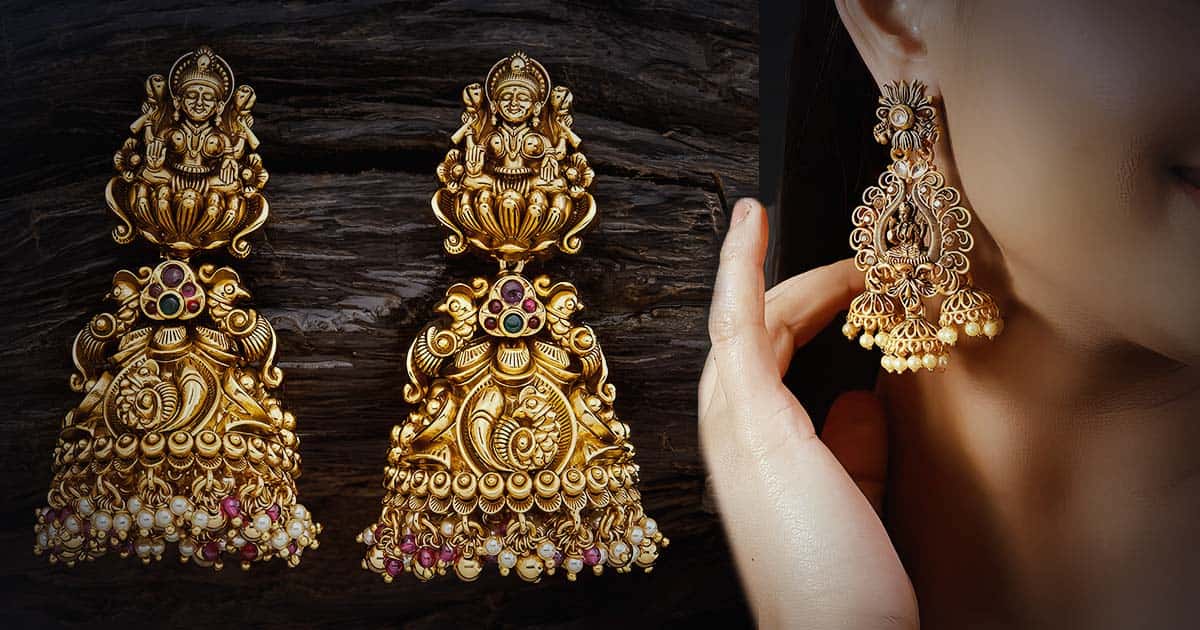
Temple Jhumka Earring are bell-shaped earrings that are widely cherished in jewellery. They have a distinct circular or conical base with a hanging dome or bell-shaped component. Jhumkas feature intricate filigree work, beaded detailing, and gemstone accents, which are well-known characteristics of these earrings.They add a touch of grace and femininity to any ensemble.
3. Temple Bangles
Temple Bangles hold a special place in Indian jewellery, and temple jewellery offers unique and ornate designs for bangles. Crafted from gold, these bangles showcase intricate carvings, engraved motifs, and embellishments of gemstones. They come in various sizes and styles, from slim and delicate to broad and bold.

4. Temple Vanki (Armlet)
Temple Vanki, also known as an temple armlet or temple bajuband, is a decorative piece of jewellery worn on the upper arm. It is a significant accessory in traditional South Indian bridal attire. Vankis often feature elaborate designs, intricate engravings, and gemstone embellishments. The design may include motifs of deities, peacocks, or nature-inspired elements.

5. Temple Maang Tikka
Temple Maang tikka is a forehead ornament that adds a regal touch to Indian ethnic looks. In this jewellery, artisans design maang tikkas with intricate craftsmanship, incorporating a pendant or decorative element suspended from a chain that gracefully rests on the forehead. These tikka pendants often showcase symbolic motifs or depictions of deities, making them an essential part of bridal jewellery sets and traditional ensembles.

6. Temple Waistbands (Kamarpatta)
Temple Waistbands, known as vaddanam or kamarband, are another popular design in jewellery. People wear waistbands around their waist, and these pieces often showcase a central pendant or motif that hangs in front. Waistbands can be broad or narrow, and they are adorned with intricate designs, filigree work, and gemstones. They accentuate the waistline and add a regal touch to traditional sarees and lehengas.

People highly seek the designs of temple jewellery for their exquisite craftsmanship, intricate details, and their ability to enhance the beauty of traditional Indian attire.
Women cherish them for their timeless appeal and adorn themselves with these pieces during special occasions and festive celebrations.
Caring for Your Temple Jewellery

Store each piece separately in a soft cloth or jewellery pouch to prevent scratches.

Avoid exposing Temple Jewellery to harsh chemicals or perfumes.

Clean your jewellery regularly with a mild jewellery cleaner or a mixture of warm water and gentle soap.

Gently wipe the jewellery using a soft cloth to remove any dirt or residue.

It is advisable to remove Jewellery before swimming
Frequently Asked Questions (FAQs) regading Temple Jewellery
Q1: What is Temple Jewellery?
Temple Jewellerys refers to the ornate jewellery traditionally crafted in South India for religious ceremonies and temple deities. It is characterized by intricate designs, divine motifs, and a rich cultural heritage.
Q2: What metals are used in Jewellery?
Traditionally, Jewellery is crafted using gold, but modern adaptations also incorporate silver and other precious metals.
Q3: Is Temples Jewellery only worn for religious occasions?
While this Jewellery has its roots in religious ceremonies, it has evolved into a versatile form of adornment suitable for various occasions, including weddings, festivals, and special celebrations.
Q4: How can I style Temples Jewellery with modern outfits?
This Jewellery can be effortlessly paired with both traditional and modern outfits. Opt for a statement necklace with a simple dress or wear a pair of intricate earrings to enhance the elegance of your ensemble.
Q5: Can I customize this Jewellery designs?
Yes, many jewellery designers offer customization services for this Jewellery. You can collaborate with a skilled artisan to create a unique piece that reflects your personal style and preferences.
Q6: What are some popular motifs in Temples Jewellery?
this Jewellery features a range of popular motifs, including gods and goddesses, lotus flowers, peacocks, and intricate patterns inspired by temple architecture.
Conclusion :
In conclusion, temple designer jewellery holds a special place in the hearts of people due to its rich cultural heritage, enduring appeal, and significant symbolism. Originating from South India and inspired by Hindu mythology, temple jewellery represents a blend of art, craftsmanship, and spirituality.
The intricate designs, meticulous craftsmanship, and the use of precious metals and gemstones contribute to the timeless beauty of temple jewelleries. It holds a sense of reverence and spirituality, making it an integral part of religious ceremonies and cultural celebrations.
Whether worn by brides on their special day or adorned during festive occasions, temple god jewellery continues to mesmerize with its artistry and symbolize devotion, faith, and cultural identity. It represents a celebration of craftsmanship, heritage, and the timeless beauty that resonates across generations. Beyond weddings, this jewellery has become a fashion statement, adorning both traditional and modern ensembles. It adds a touch of charm, enhancing the overall appearance of the wearer.